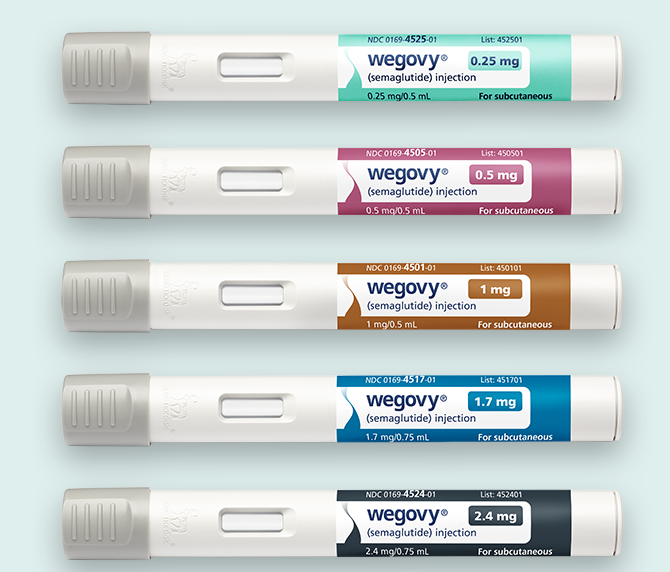
Wegovy injection
Semaglutide
Once-weekly semaglutide that supports appetite regulation alongside nutrition and activity.
- Administration
- Weekly injection
- Clinical evaluation
- Required before prescribing
- Membership
- $109/month · Medication billed separately
Availability and suitability depend on individual evaluation. Membership does not guarantee a prescription.
Understanding Wegovy injection
Injectable Wegovy is an FDA-approved semaglutide medicine for weight management in eligible patients, alongside nutrition and physical activity. A licensed clinician decides whether it fits your health history and goals.
How it works
Semaglutide activates the GLP-1 receptor, a pathway involved in appetite and food intake. It can help you feel satisfied with less food and slows stomach emptying. Its blood-sugar effects depend in part on glucose levels.
How it is administered
Use a subcutaneous injection once weekly, on the same day each week, with or without food. Follow the instructions supplied with your device. Doses increase gradually under clinical supervision; the 2.4 mg dose shown in the study is not the starting dose.
Clinical research & results
In STEP 1 (label Study 2), adults assigned to Wegovy 2.4 mg averaged 14.9% weight reduction at 68 weeks, versus 2.4% with placebo. The analysis accounts for treatment discontinuation. Participants did not have diabetes; different populations and regimens can produce different results.
These are separate trials, not a direct comparison between medicines. Study averages do not establish which medicine is best for you.
Wegovy full prescribing informationWhat could the study average look like?
An educational illustration of 14.9% weight reduction over 68 weeks.
STEP 1 · Study 2 · 2.4 mg weekly
Adults with obesity (BMI ≥30), or overweight (BMI ≥27) with at least one weight-related condition, without diabetes. Participants also received reduced-calorie diet and physical-activity support.
14.9% average reduction · 68 weeks
These figures represent average results observed in clinical trials and are provided for educational purposes only. Individual results vary. Actual outcomes depend on individual health factors, treatment response, adherence, and other considerations. Results are not guaranteed. Medication is prescribed only following an individualized clinical evaluation.
Common side effects
Common effects include nausea, diarrhea, vomiting, constipation, abdominal pain, headache, fatigue, indigestion and reflux. Contact your clinician if symptoms persist or interfere with eating and drinking.
Safety & important considerations
- Do not use with a personal or family history of medullary thyroid carcinoma (MTC), Multiple Endocrine Neoplasia syndrome type 2 (MEN 2), or a serious allergy to the medication. These products carry a boxed thyroid C-cell tumor warning; the risk in humans is unknown.
- Serious risks include pancreatitis, gallbladder problems, dehydration-related kidney injury and severe digestive symptoms. These medicines are not recommended in severe gastroparesis. Seek urgent care for persistent severe abdominal pain, serious allergic symptoms, or sudden vision changes.
- Tell your clinician about all medicines, diabetes-related eye disease, planned anesthesia or deep sedation, and pregnancy plans. Low blood sugar risk can increase with insulin or sulfonylureas. Do not combine with other GLP-1 medicines; your clinician reviews interactions and suitability.
- For weight management, discontinue when pregnancy is recognized. Stop semaglutide at least 2 months before a planned pregnancy, with your clinician’s guidance. Do not use alongside another semaglutide-containing product.
This is a summary, not a complete list of risks or instructions. Read the full prescribing information and Medication Guide and speak with your clinician.
Read official safety informationMore about Wegovy injection
Is injectable Wegovy the same as oral Wegovy?
Both contain semaglutide, but their formulation, administration and doses differ. Do not exchange them milligram-for-milligram or switch without a prescriber’s plan.
Does the 14.9% figure apply to everyone?
No. It is the average in the specified trial at 68 weeks, not an individual forecast. Health factors, dose, adherence and tolerability affect outcomes.
Can I choose my injection day?
A consistent weekly schedule is used. Any schedule change or missed dose should follow the prescribing information and your care team’s instructions.